
Kato Zakros

Ankunft
Seit 2010 träume ich davon, seit letzten Sommer kündigen wir uns an, jetzt haben wir es geschafft. Mit Jürgens Hilfe ist die Pepperbird gestern von Kouremenos nach Kato Zakros gefahren. Immer wenn ich mir eine eigene Yacht vorgestellt habe, sah ich sie in dieser Bucht vor Anker liegen, jetzt sitze ich allein im Salon und schreibe an diesem Blog.
Arrival
I’ve been dreaming about this since 2010; we’ve been talking about it since last summer, and now we’ve finally done it. With Jürgen’s help, the Pepperbird sailed from Kouremenos to Kato Zakros yesterday. Whenever I imagined having my own yacht, I pictured it at anchor in this bay; now I’m sitting alone in the cabin writing this blog.
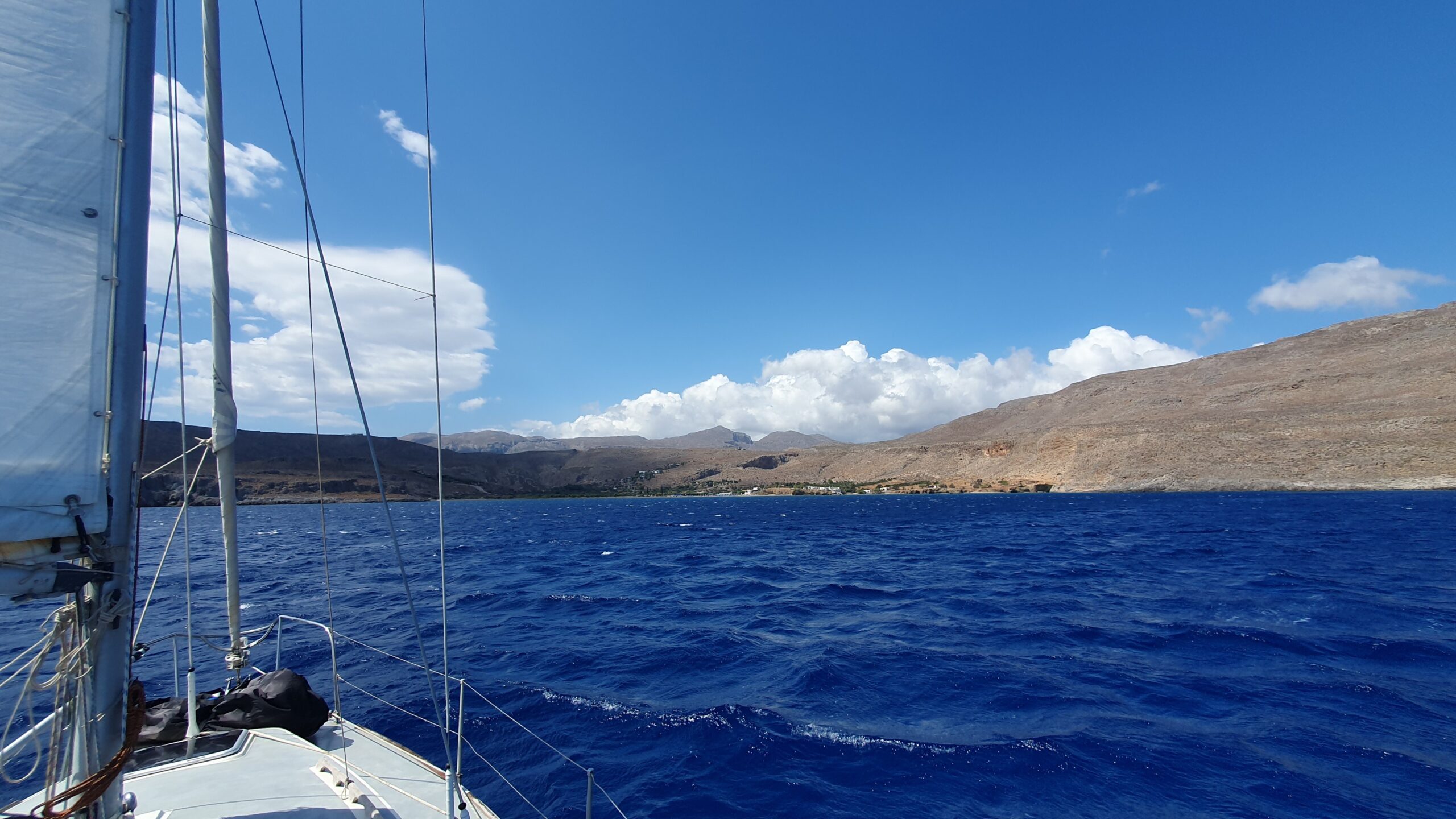
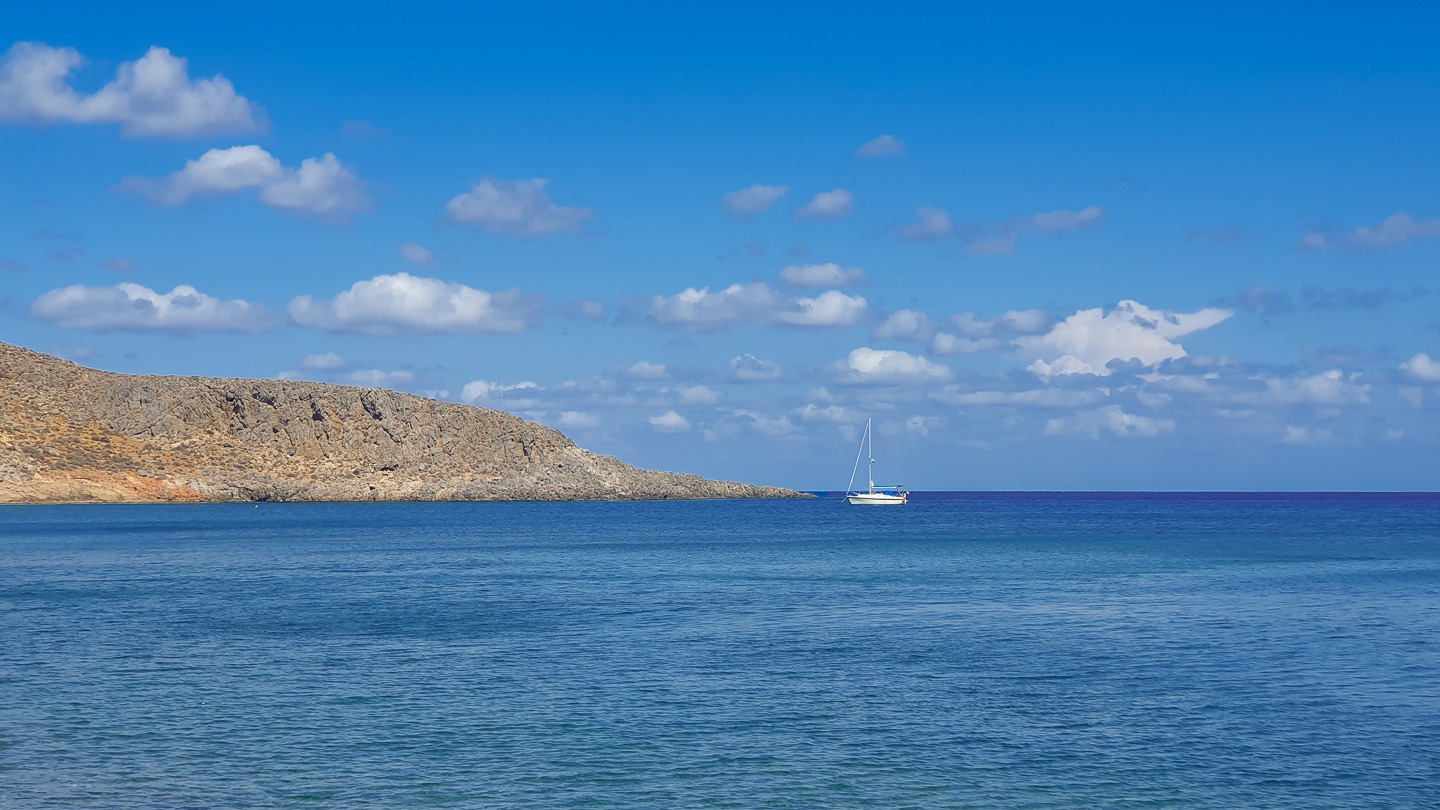
Auf dem Weg zum Ankerplatz
On the way to the anchorage
Beinahe wäre wieder nichts daraus geworden: Livia geht es nicht gut, das Segeln hat ihr nicht gutgetan und alleine im Hotel fühlt sie sich auch nicht wohl. Also bleibt Hanna bei ihr und ich mache mich auf die Suche nach einem Mitsegler. Jürgen, der uns schon bei der Bergung des Ankers geholfen hat, muss nicht zweimal gefragt werden. Übernachten will er zwar an Bord nicht, aber die 10 bis 12 Seemeilen nach Kato Zakros fährt er gerne mit.
Es bleibt die Frage: wann? Mittwochabend und Donnerstagmorgen soll es noch regnen, am Freitag sind dann Böen bis über 30 Knoten angesagt, also wird Donnerstag 9:00 als Treffpunkt ausgemacht. Der Regen – nicht einmal unergiebig – ist da schon vorbei, und wir machen uns bereit, die Fahrt anzutreten.
It almost didn’t work out again: Livia isn’t feeling well; sailing hasn’t done her any good, and she doesn’t feel comfortable on her own in the hotel either. So Hanna is staying with her, and I’m off to look for someone to sail with. Jürgen, who’s already helped us retrieve the anchor, doesn’t need to be asked twice. He doesn’t want to spend the night on board, but he’s happy to come along for the 10 to 12 nautical miles to Kato Zakros.
The question remains: when? It’s due to rain on Wednesday evening and Thursday morning, and on Friday gusts of over 30 knots are forecast, so we agree to meet at 9.00 am on Thursday. The rain – which wasn’t even particularly light – has already stopped by then, and we get ready to set off.
Endlich!
Finally!
Die Vorbereitungen dauern dann natürlich länger als gedacht (wie immer), weil wir nicht nur den Anker wieder zurücktauschen müssen – der Vulcan lässt sich schlecht stauen, der Jambo ist zerlegbar und hat schon seinen fixen Platz unter Deck. Kurz nach halb elf ist es dann aber so weit, wir legen ab.
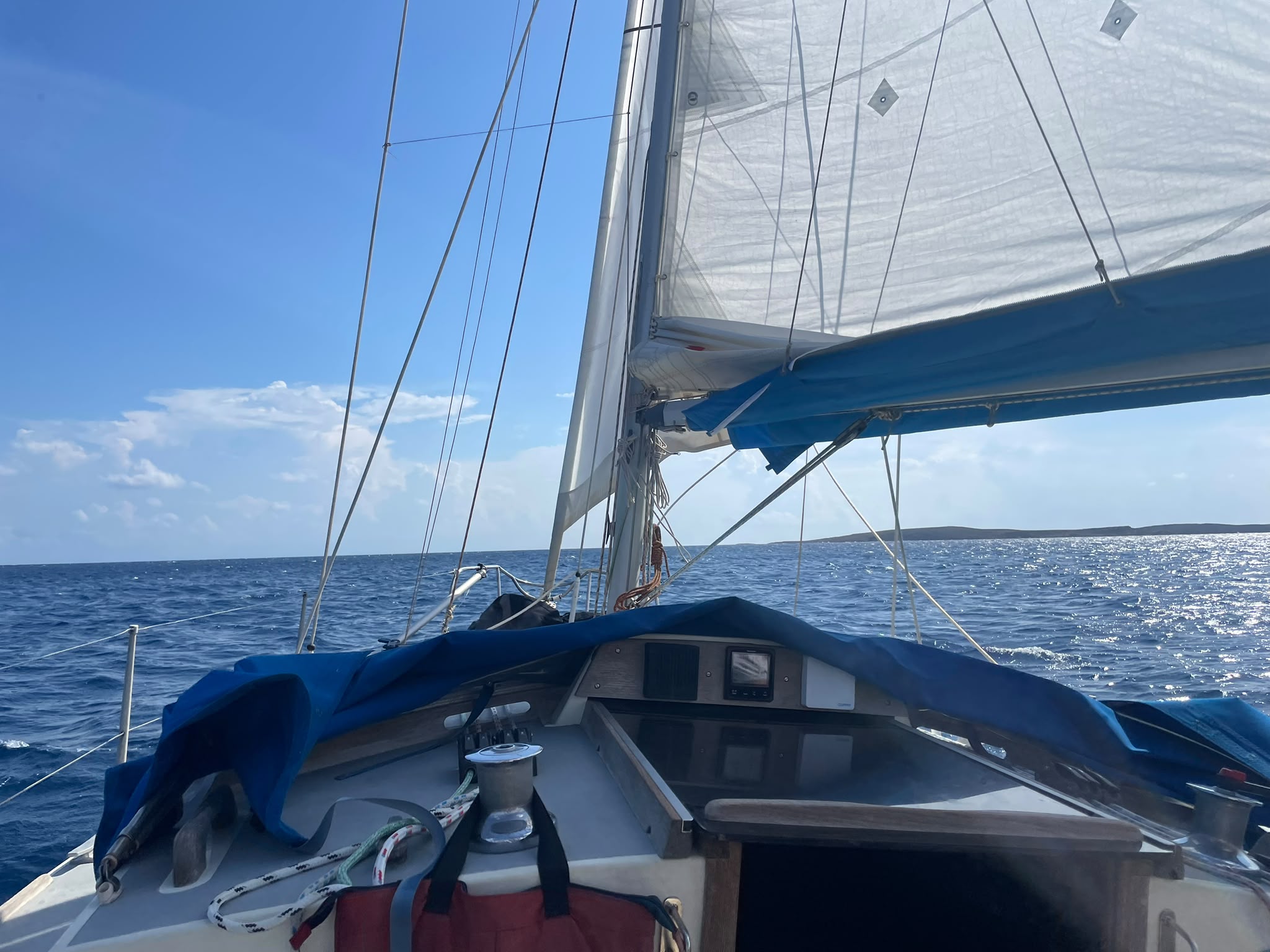
Nachdem der Anker aufgeholt und ausgetauscht ist, werden die Segel gesetzt, angesichts der vorhergesagten 25 Knoten Nordwest-Wind fahren wir mit zwei Reffs los – wir werden die ganze Zeit nicht mehr Segel brauchen und erreichen trotzdem immer wieder über 7 Knoten Fahrt; und das mit dem Biotop, das inzwischen auf unserem Rumpf heimisch geworden ist!
The preparations naturally take longer than expected (as always), because we don’t just have to swap the anchor back – the Vulcan is difficult to stow, whilst the Jambo can be dismantled and already has its designated place below deck. Shortly after half past ten, however, we’re ready to go and cast off.
Once the anchor has been hauled in and replaced, the sails are hoisted; given the forecast of a 25-knot north-westerly wind, we set off with two reefs in – we won’t need any more sail throughout the entire journey and still manage to reach speeds of over 7 knots time and again; and that’s despite the biotope that has now made itself at home on our hull!
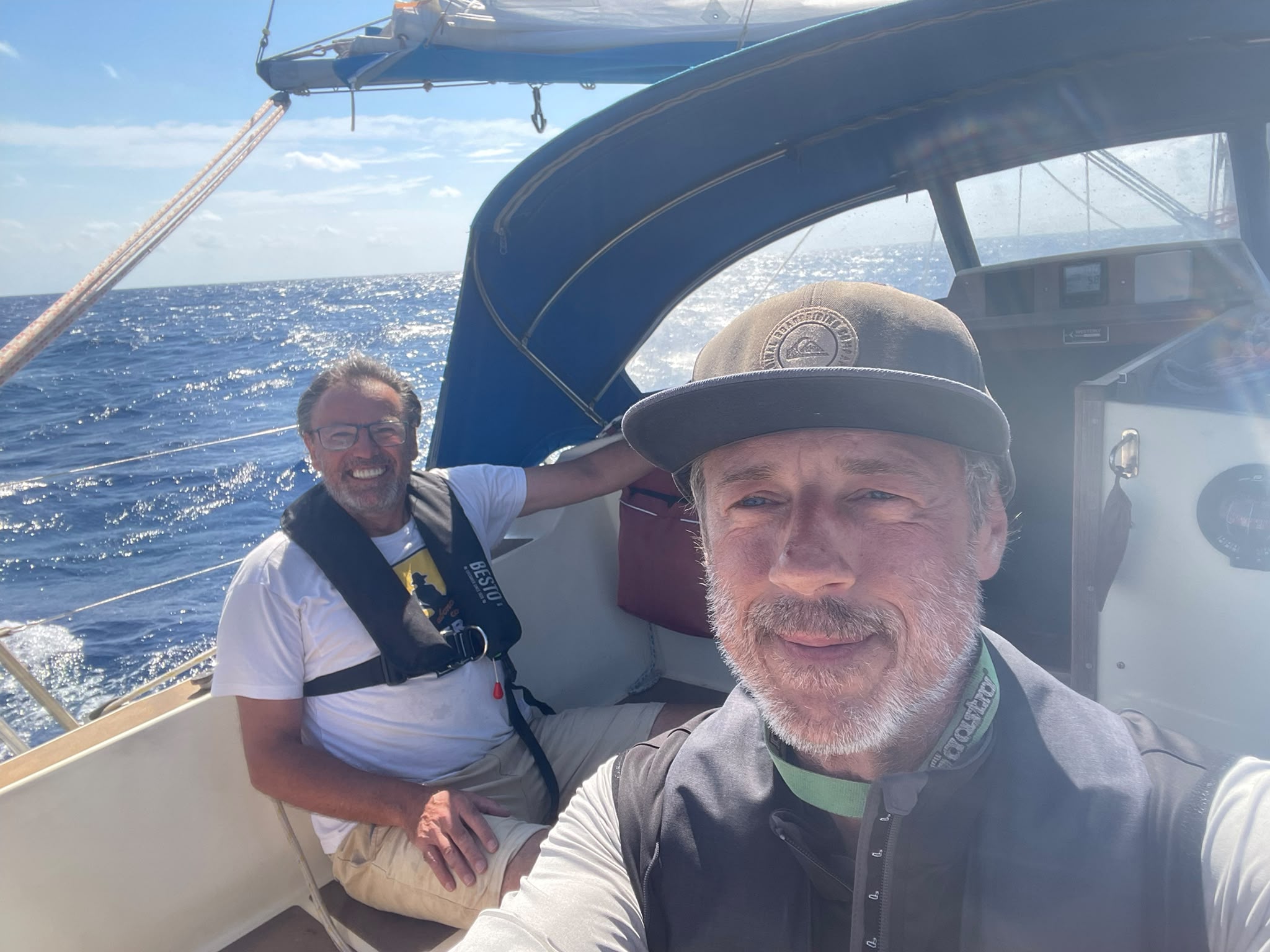
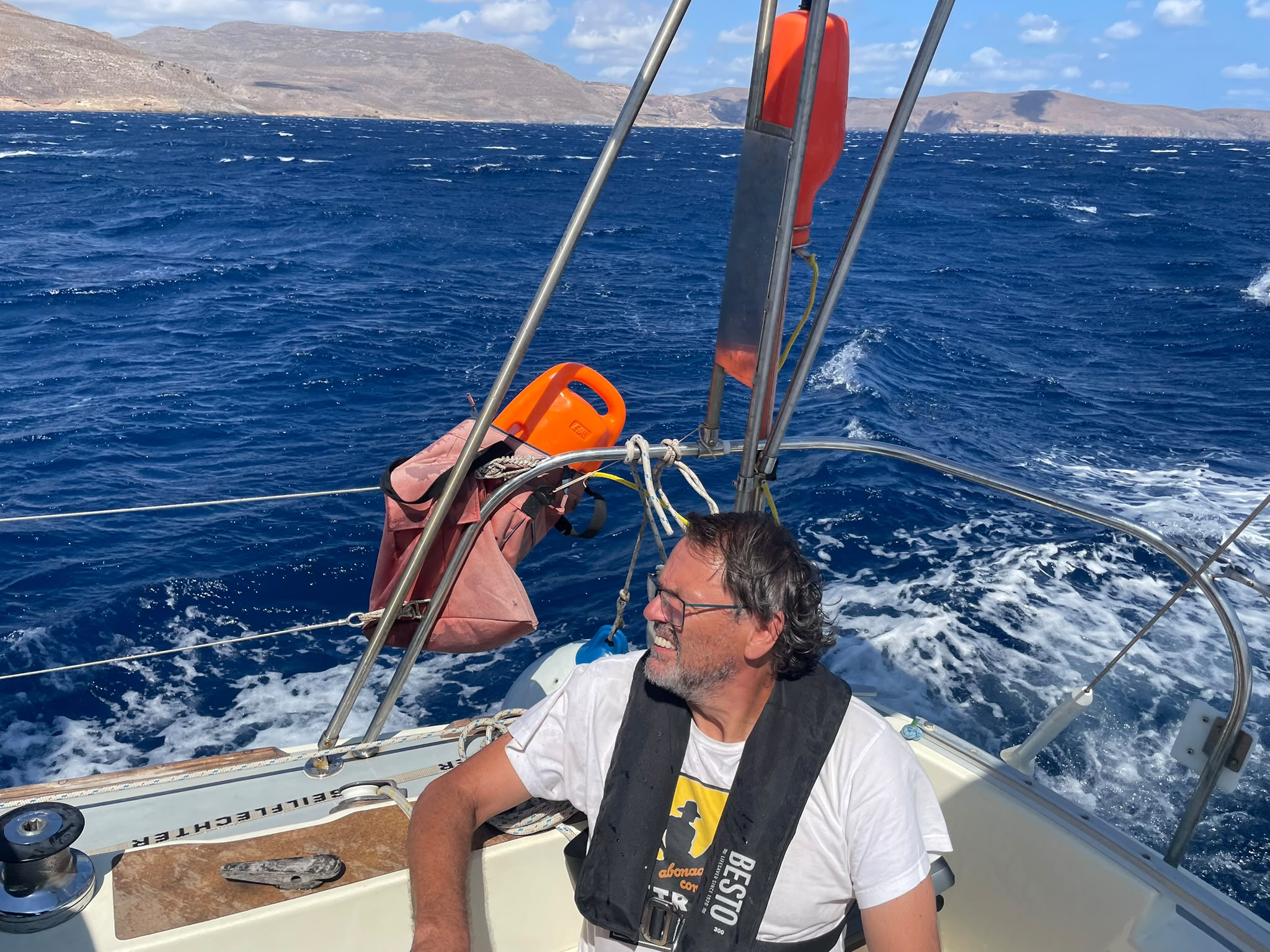
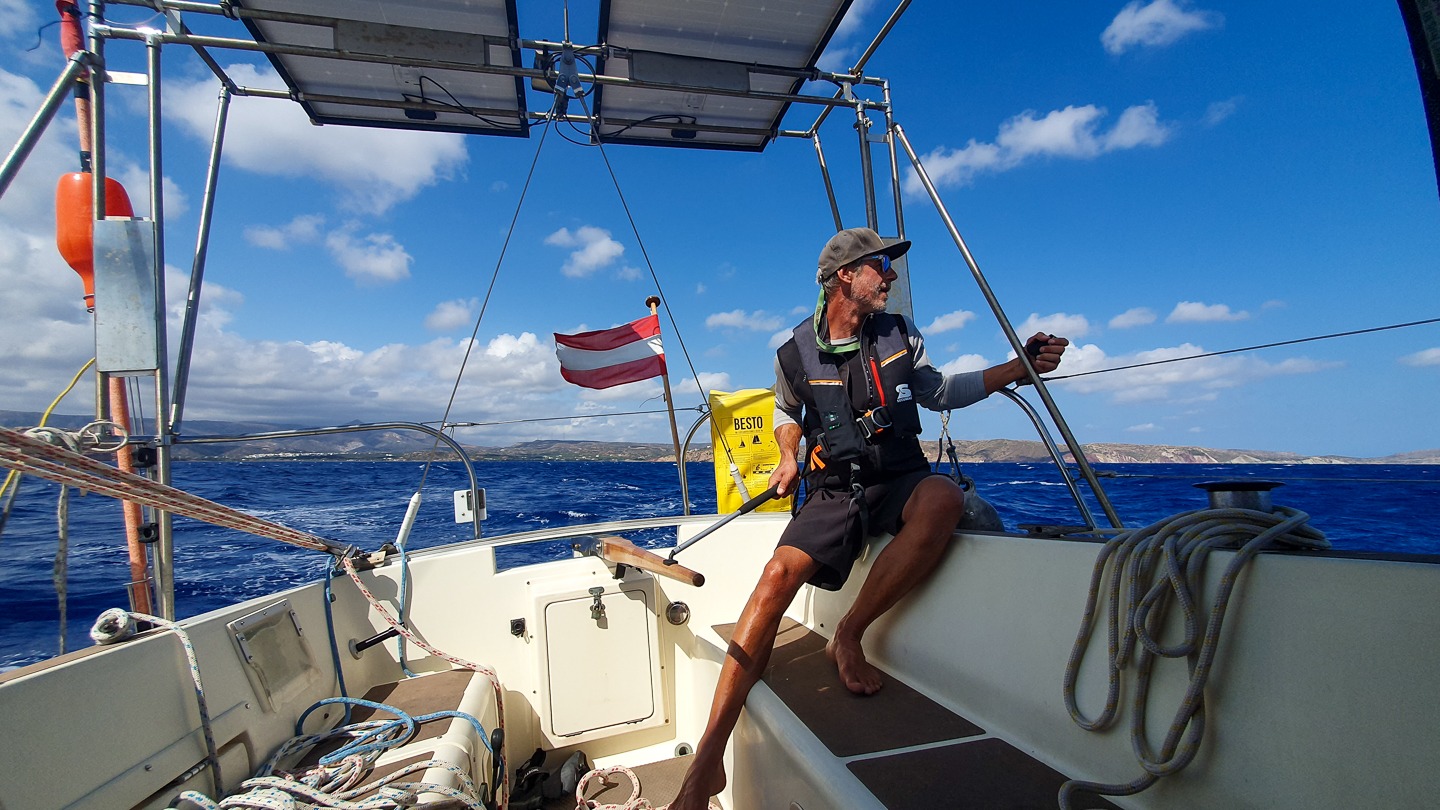
Jürgen hat sichtlich Spaß
Jürgen is clearly enjoying himself
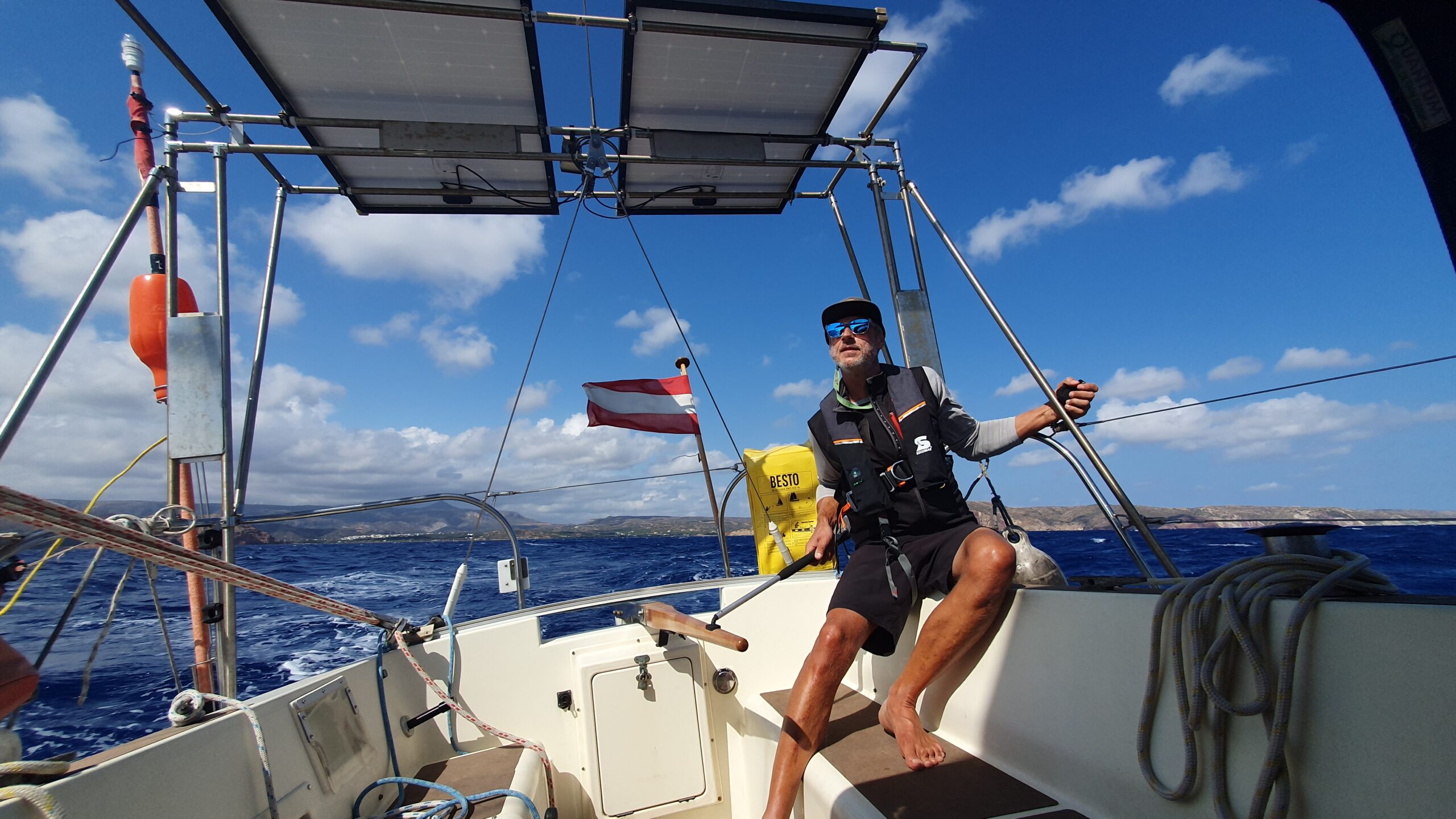
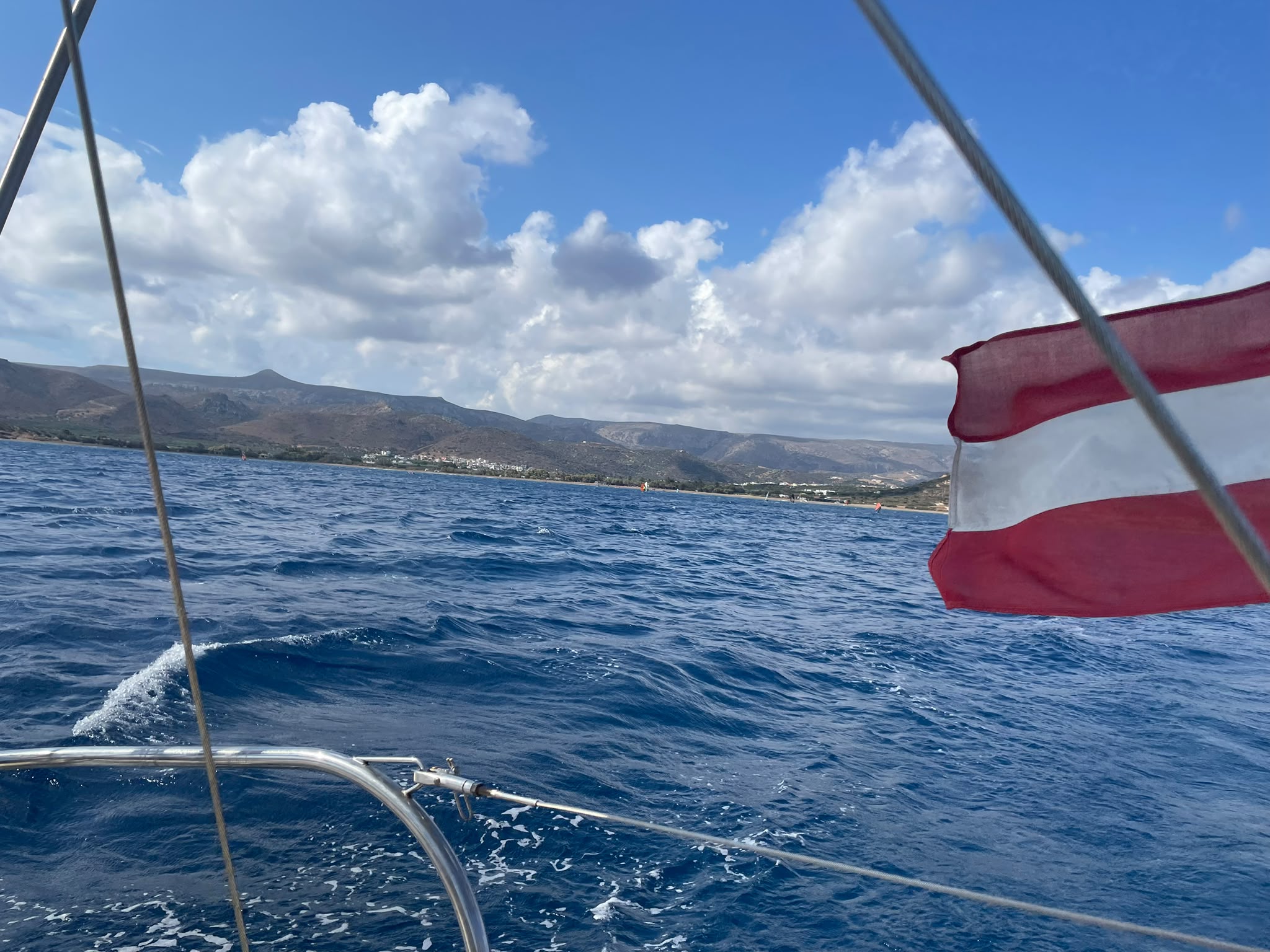
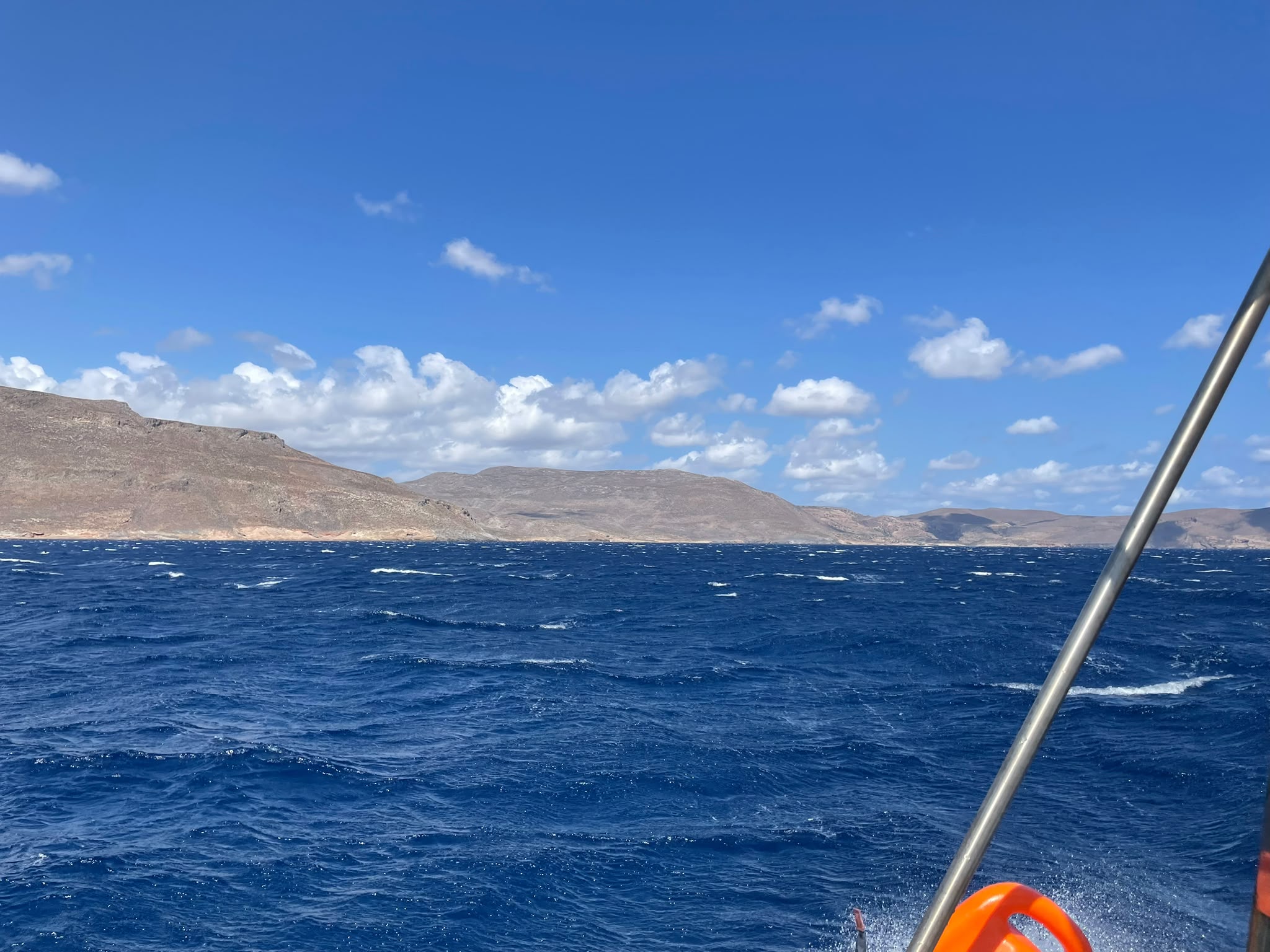
Bis über das Kap Plaka hinaus fahren wir einen östlichen Kurs, als wir so weit draußen sind, dass wir nach einer Halse die Bucht von Zakros direkt anliegen können, halsen wir und segeln auf raumem Kurs in den Vormittag hinein. Wir gratulieren uns zu der Entscheidung gleich mit zwei Reffs gestartet zu sein, trotz der kleinen Segelfläche ist die Pepperbird sehr luvgierig, aber das wird etwas besser, als ich den Traveller nach Lee stelle.
Auf unserer Fahrt registrieren wir all die Plätze, die wir von unseren Wanderungen her kennen: die drei Buchten von Skiniás, die Schlucht von Chochlakiés, die im Strand von Karoumes endet, den Höhleneingang von Pelekitá und später natürlich die Einfahrt in die weite Bucht von Zakros.
We sail on an easterly course past Cape Plaka; once we are far enough out that we can reach the Bay of Zakros directly after a gybe, we change tack and sail on a broad reach into the morning. We congratulate ourselves on the decision to set off with two reefs in the sails; despite the small sail area, the Pepperbird shows a lot of weather-helm, this improves slightly when I move the traveller to leeward.
On our journey, we take in all the places we recognise from our hiking tours: the three bays of Skiniás, the Chochlakiés Gorge, which ends at Karoumes Beach, the entrance to the Pelekitá cave and, later of course, the entrance to the vast Bay of Zakros.
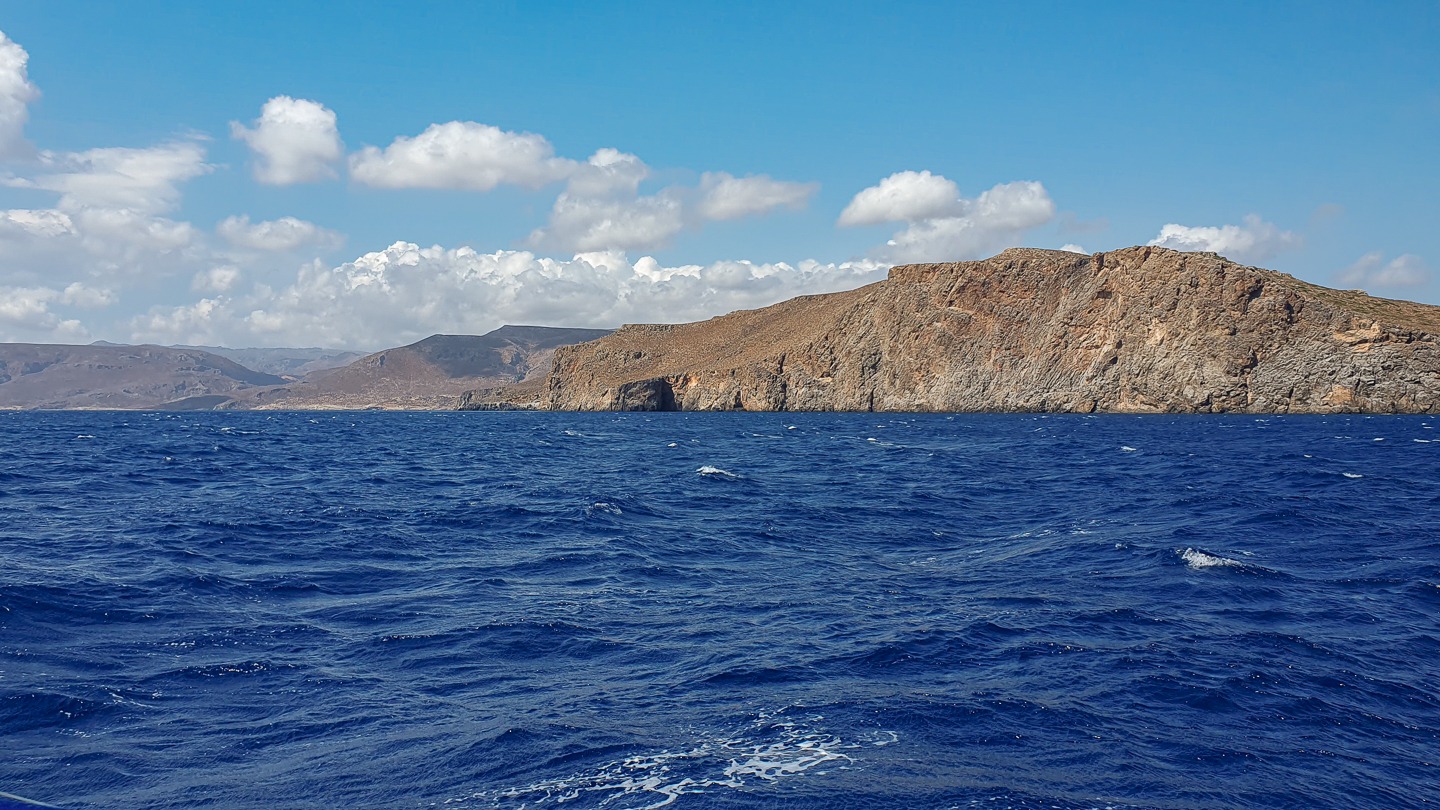
Skiniás
Karoumes & Chochlakiés
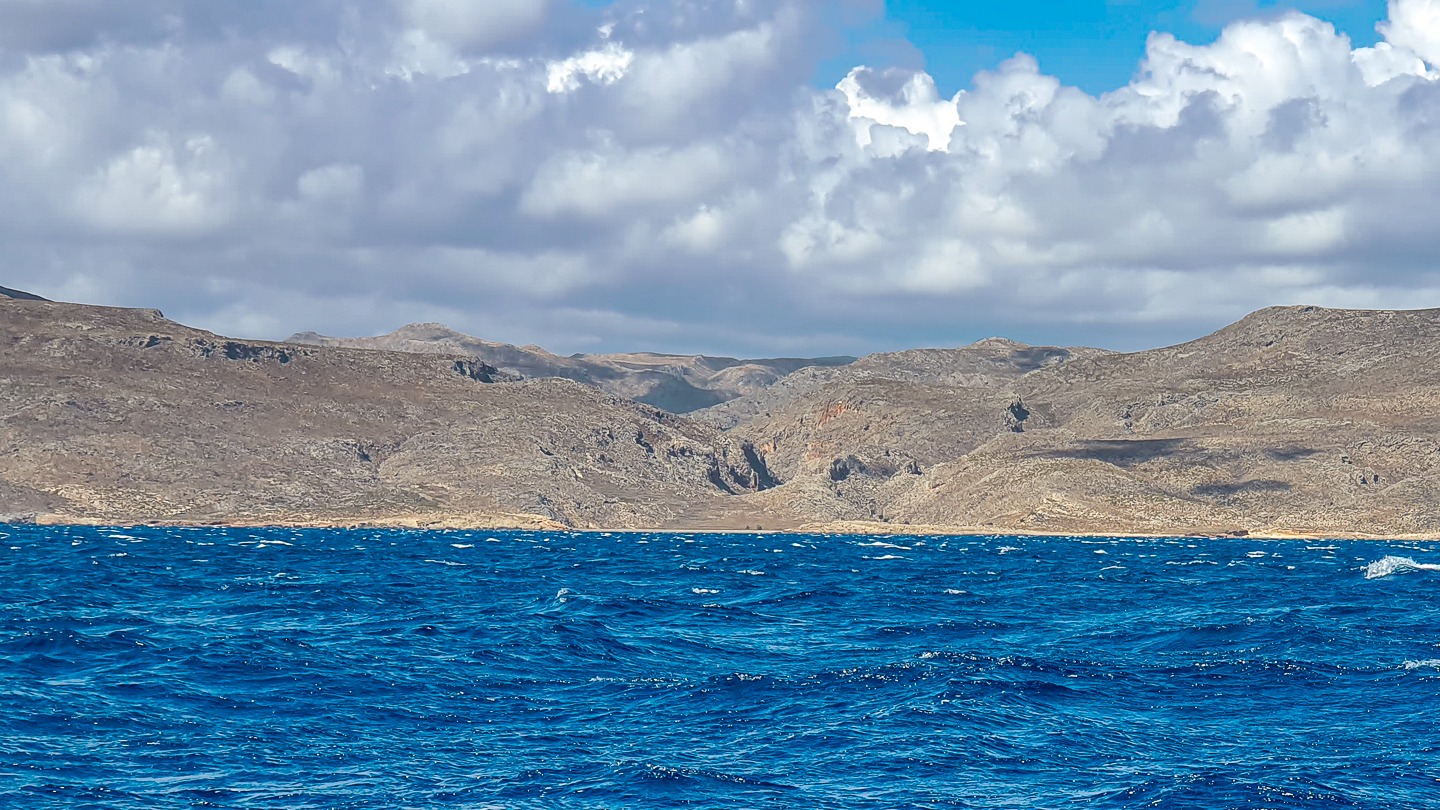
Inzwischen sind die Böen schon ziemlich heftig geworden. Hier unter Land machen sie sich als kräftige Fallböen bemerkbar. Nach dem Segelbergen hat unser Rudolf (Diesel) schon etwas Mühe, dagegen anzukommen. Zum Glück haben wir keine Wellen und so motoren wir zu unserem Ankerplatz in der nordwestlichen Ecke der Bucht.
Auf fünf Meter Tiefe in glasklarem Wasser und auf einem Grund aus festem Sand hält unser Anker beim ersten Versuch – so bin ich es gewohnt. Wir fahren ihn noch mit 2.500 Touren ein und haben dann etwas Mühe, das Dinghi in den stürmischen Böen aufzupumpen.
By now the gusts have become quite fierce; here, close to shore, they’re making themselves felt as powerful downwind gusts. After stowing the sails, our Rudolf (Diesel) is struggling a bit to cope with them. Fortunately, there are no waves, so we motor to our anchorage in the north-western corner of the bay.
At a depth of five metres in crystal-clear water and on a bed of firm sand, our anchor holds on the first attempt – just as I’m used to. We set it at 2,500 revs in reverse and then have a bit of trouble inflating the dinghy in the stormy gusts.
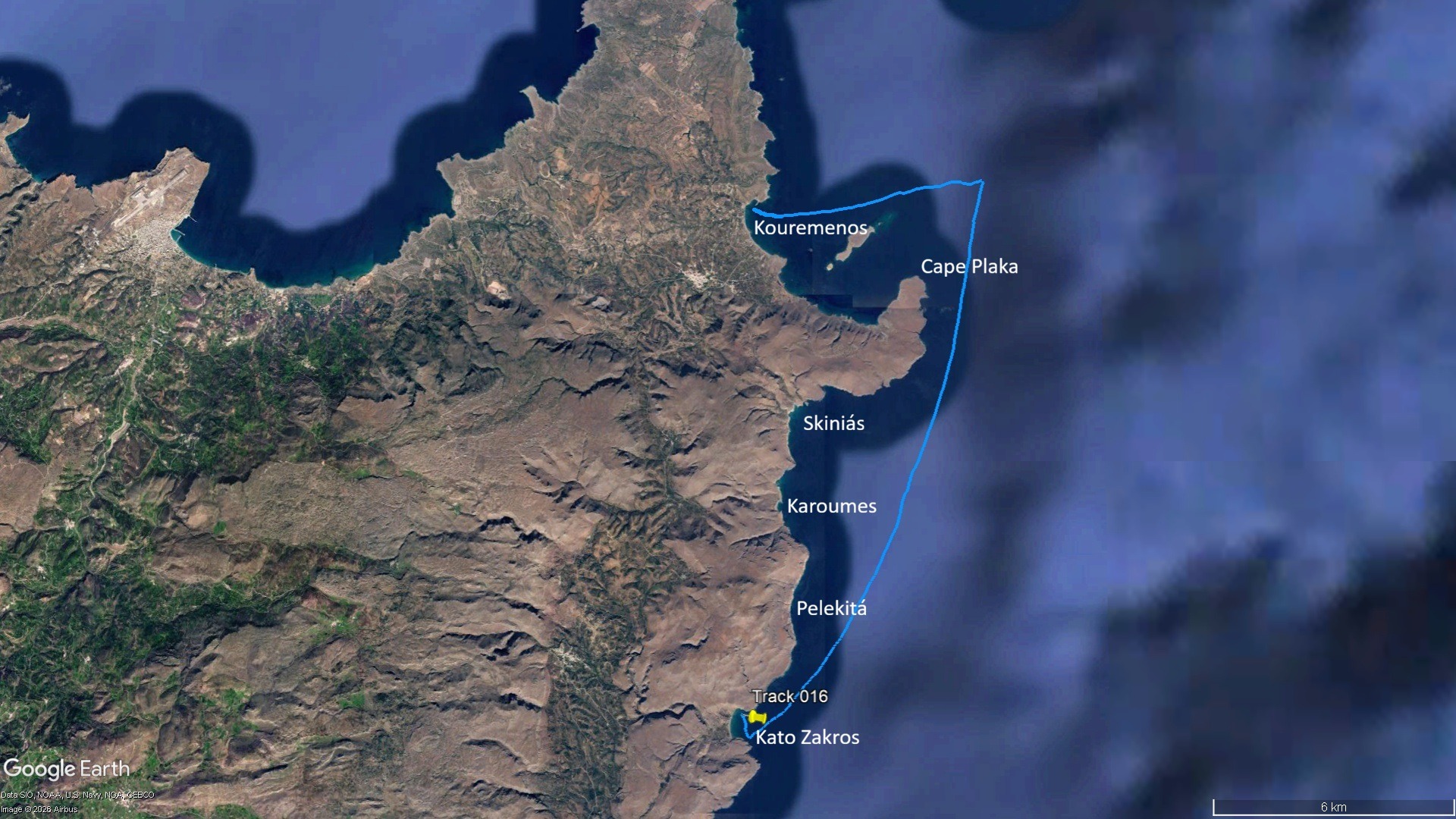
11,9 Seemeilen,
2:20 Stunden
11.9 nautical miles,
2:20 hours
Wir sind am Ziel
We’ve reached our destination
Mit einer 20 m langen Leine gesichert, teste ich zuerst, ob der 500 Watt starke Elektromotor ausreicht, um gegen den Wind anzukommen. Wir brauchen nicht mehr als „halbe Kraft“, um das Ufer und unser Stammlokal, das Akrogiali, zu erreichen. Dort essen wir eine Kleinigkeit zu Abend, dann fahren Hanna, Jürgen und Livia wieder zurück nach Palékastro – Livia geht es leider immer noch nicht so gut.
Ich fahre alleine zurück an Bord, mache das Dinghi gut fest, stelle den Ankeralarm ein und verbringe eine unruhige, böige Nacht. Heute Früh habe ich die Kette um gut fünf Meter verlängert (es sind jetzt über 30 m draußen, bei 5 m Wassertiefe) und habe ein Stück Schlauch um die Sicherungsleine gegeben, damit die Leine weniger scheuert und nicht mehr so viel quietscht. Nächste Nacht werde ich hoffentlich ruhiger schlafen.
Secured with a 20-metre line, I first check whether the 500-watt electric motor is powerful enough to make headway against the wind. We need no more than ‘half power’ to reach the shore and our favourite restaurant, the Akrogiali. There we have a light supper, then Hanna, Jürgen and Livia head back to Palékastro – unfortunately, Livia is still not feeling very well.
I row back on board alone, secure the dinghy properly, set the anchor alarm and spend a restless, gusty night. This morning I extended the chain by a good five metres (there’s now over 30 metres out, in 5 metres of water) and wrapped a piece of hose round the safety line so that the line chafes less and doesn’t creak so much. Hopefully I’ll sleep more peacefully next night.
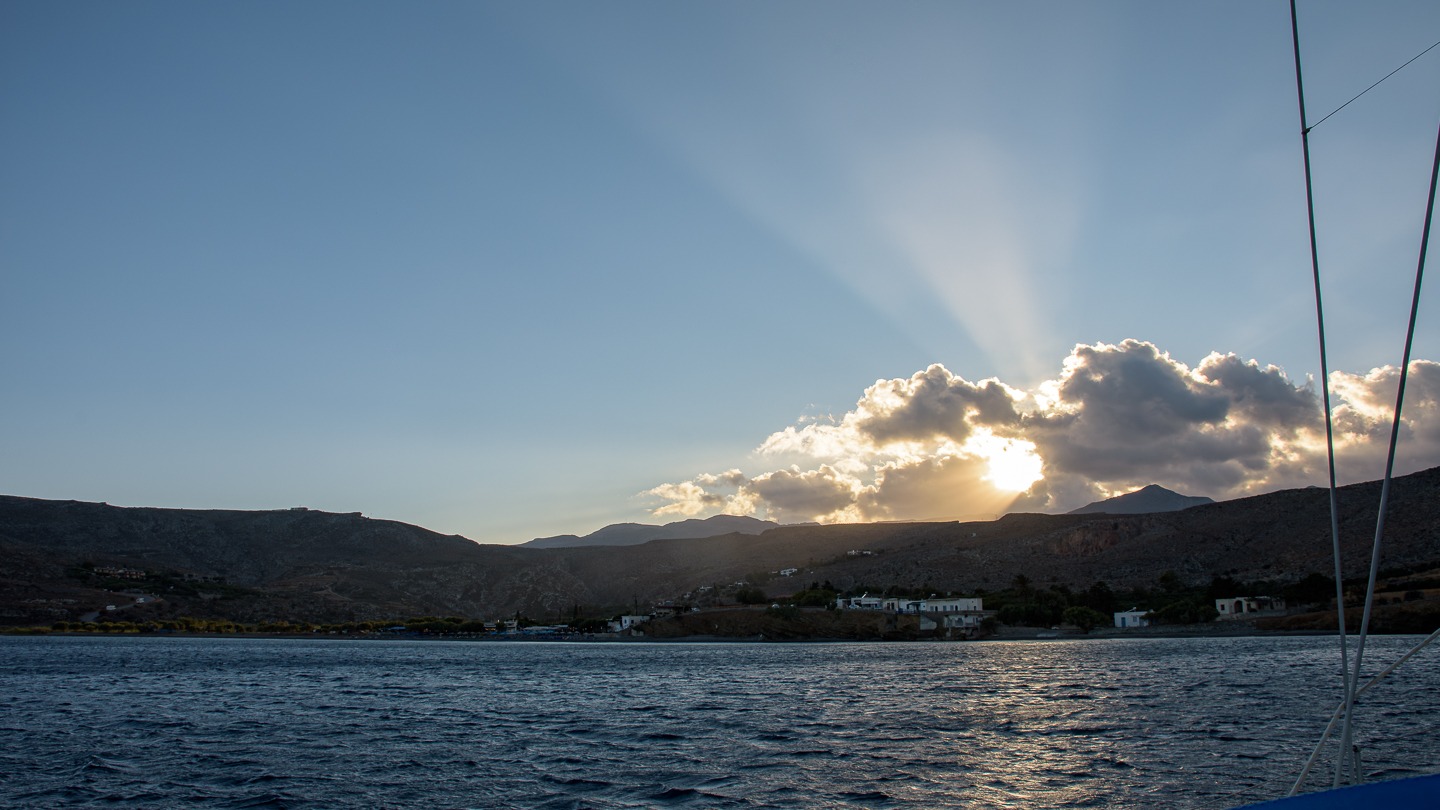
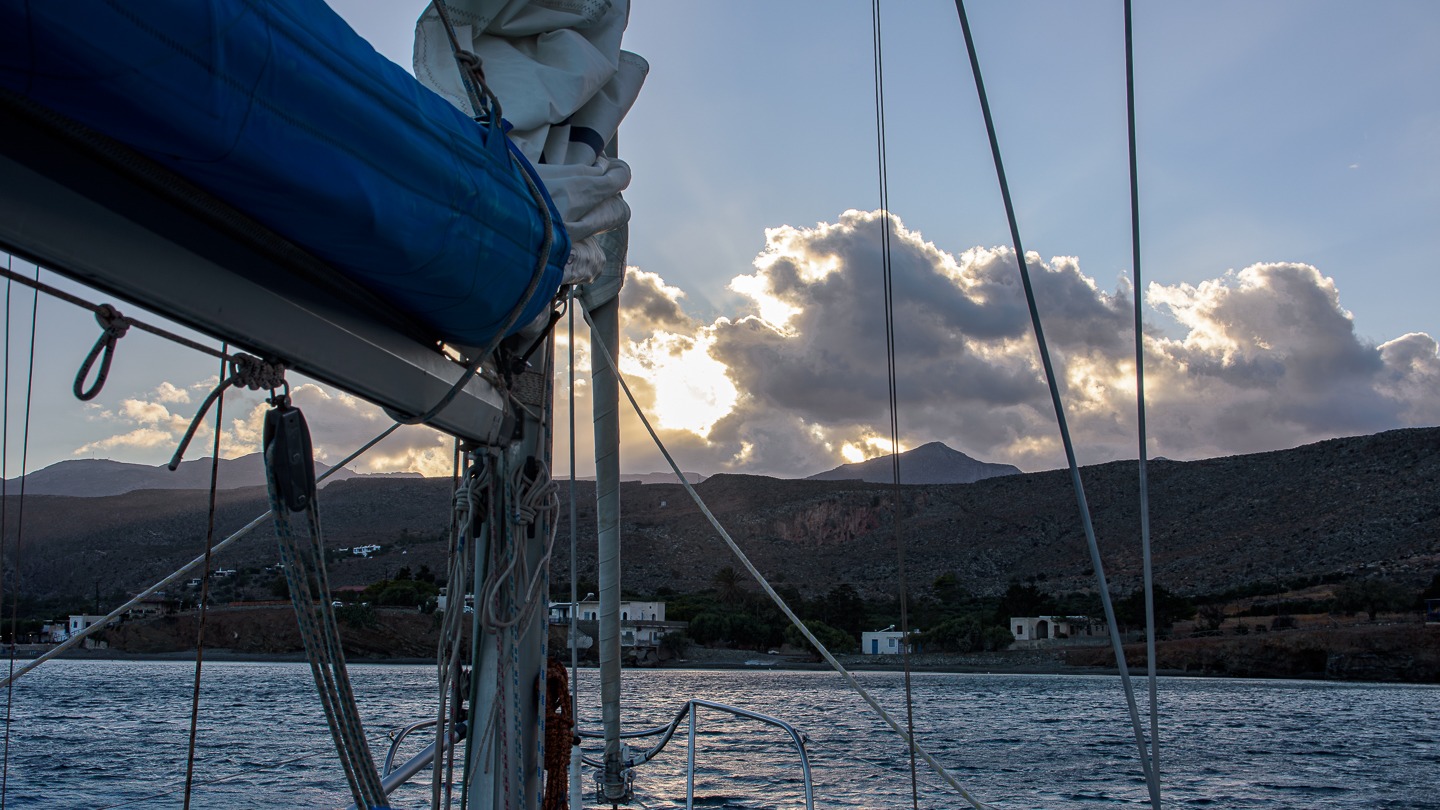
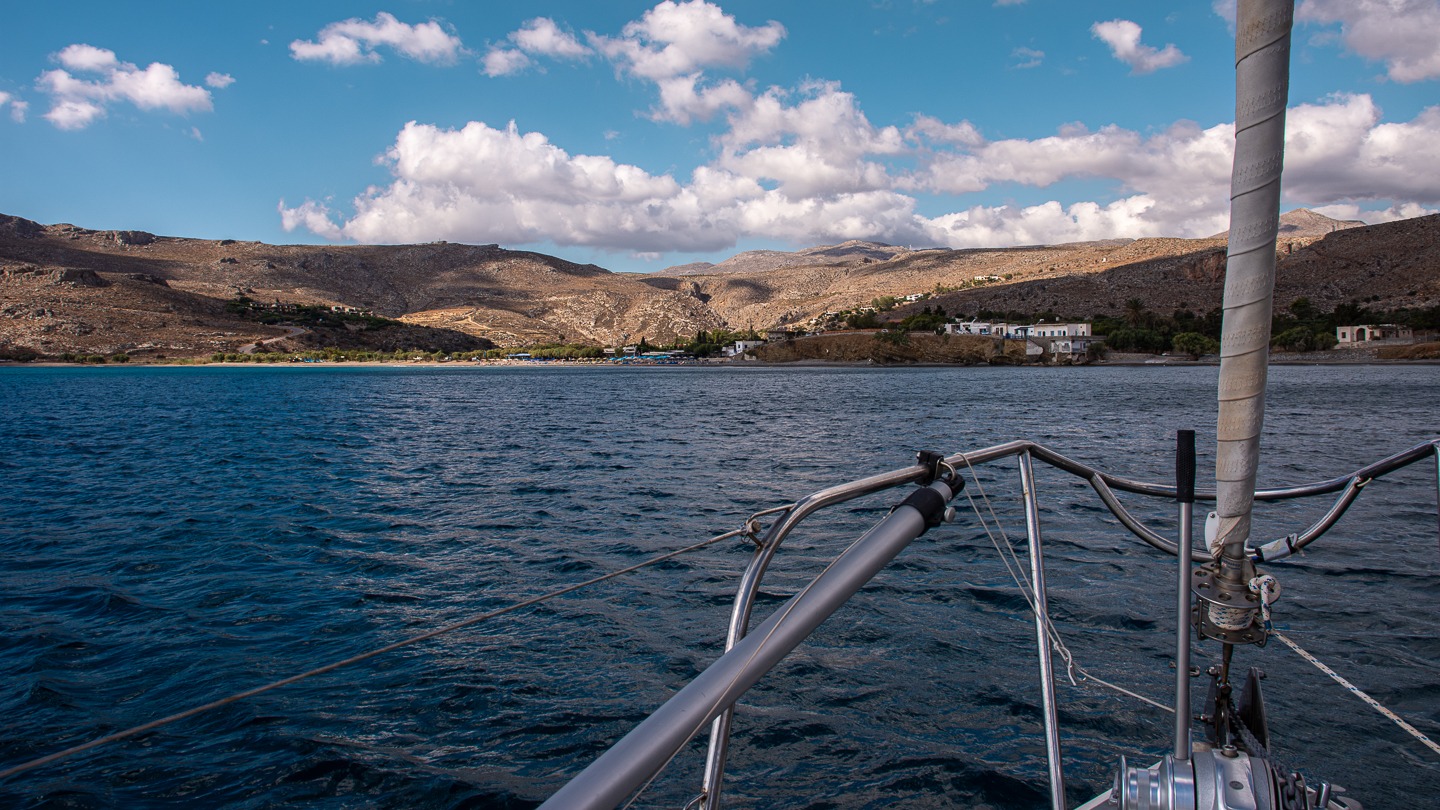
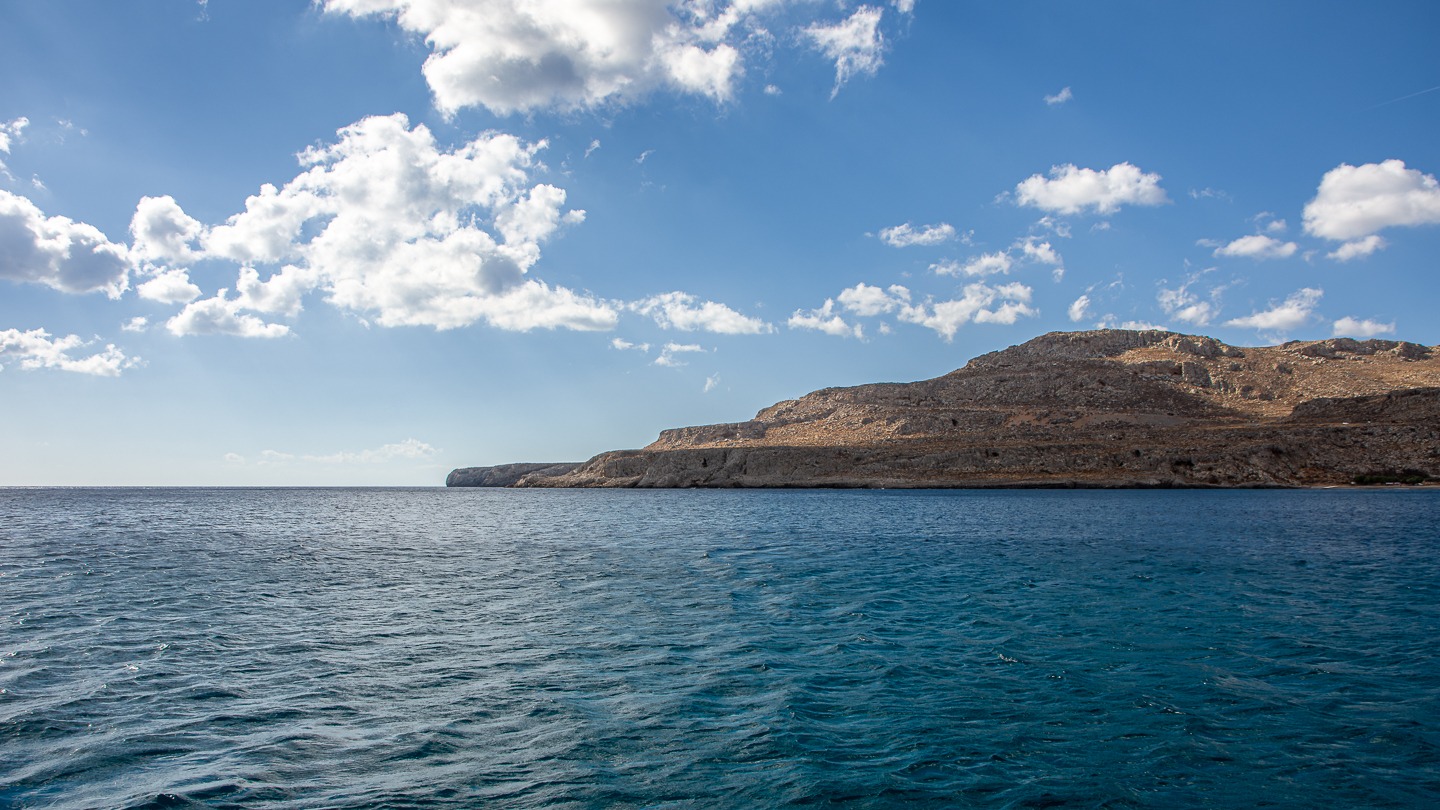
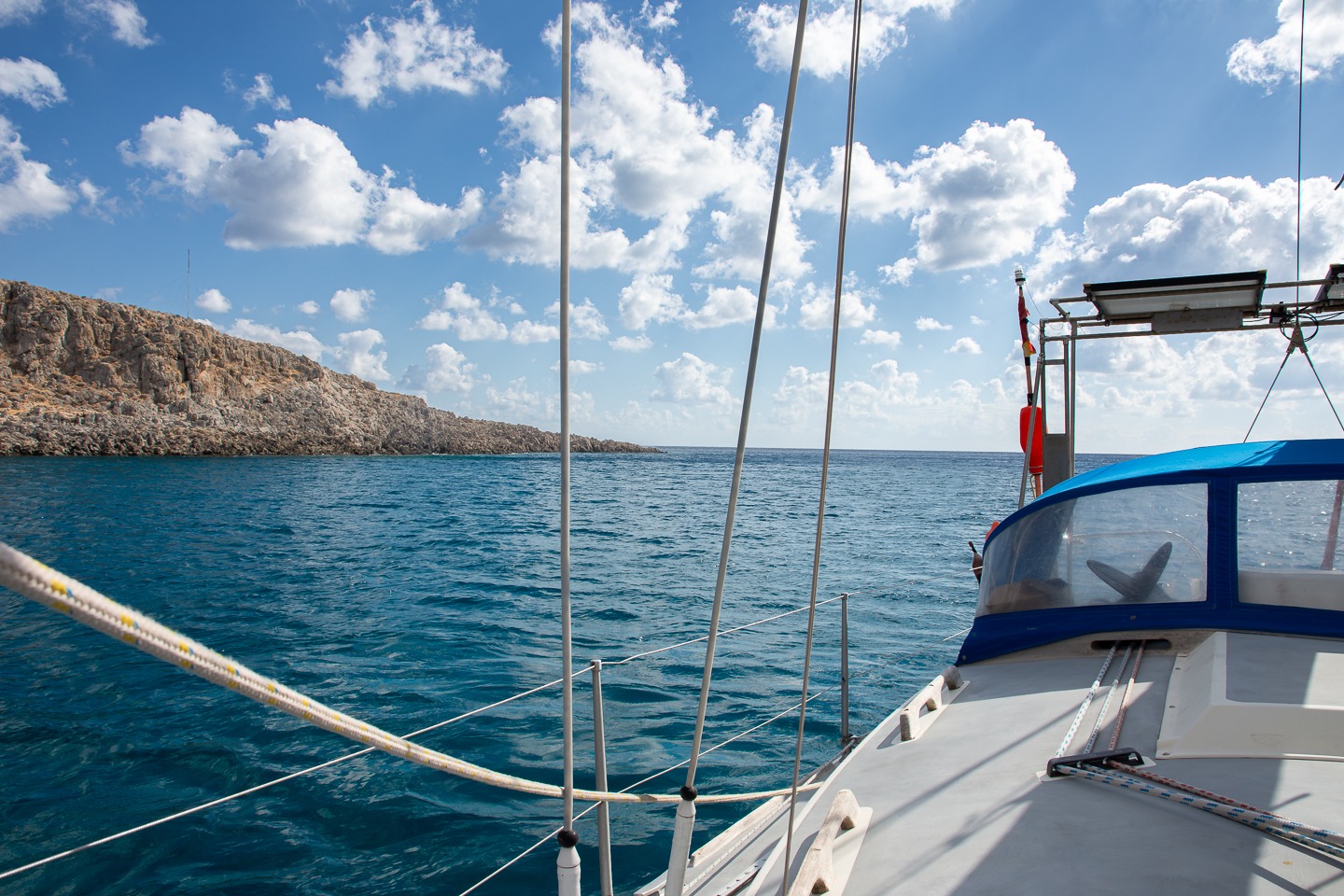
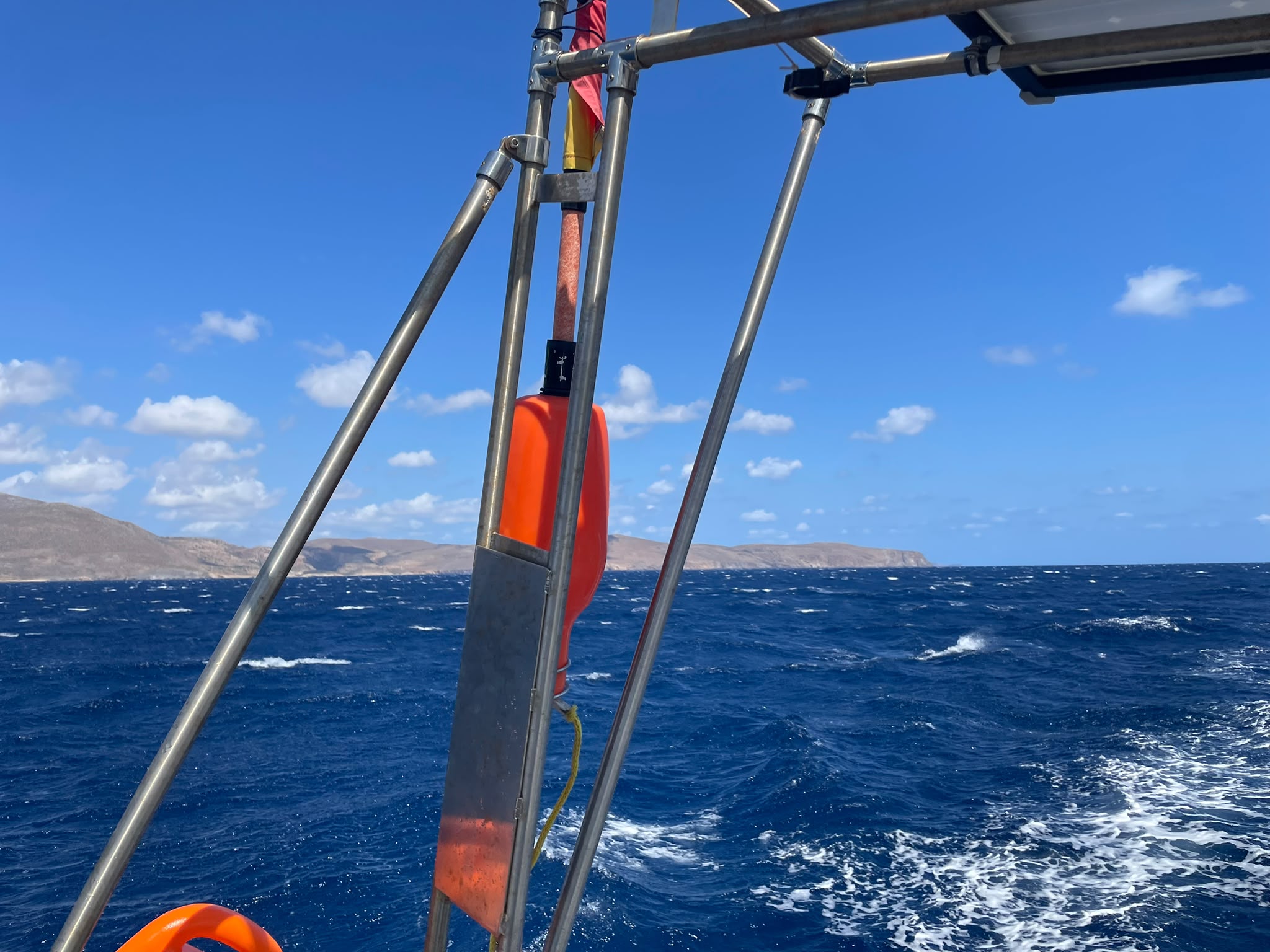
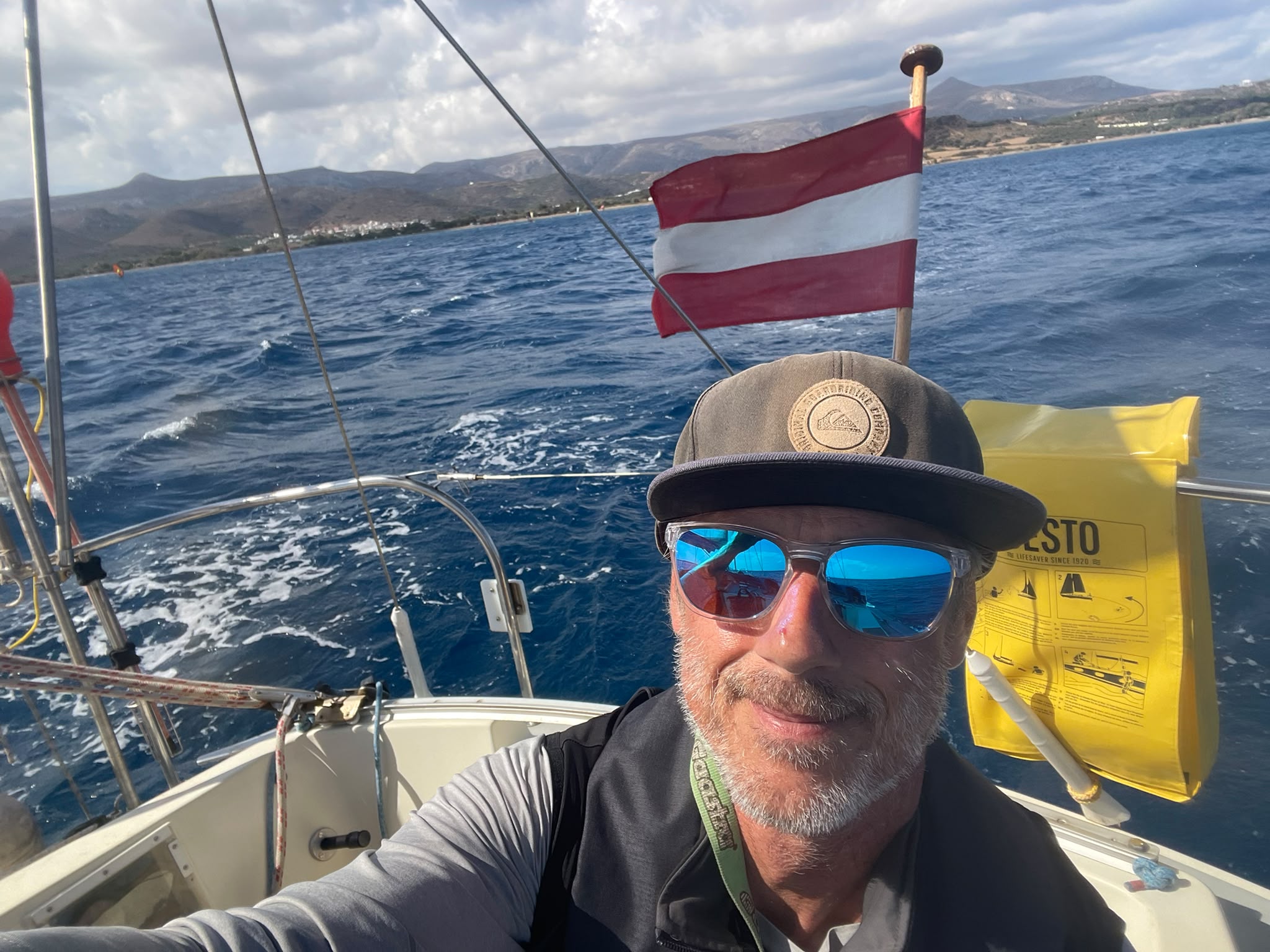
Impressionen ©Jürgen
Impressions ©Jürgen